

اسمحلي يا عزيزي ساهر بأن أسألك هذه المرة، رغم أن عنوان موضوعنا يلزمني أن أكون أنا المجيب.
اذا اتفقنا على أن الله قد خلق المادة الأولى للحياة، فهل عندكم دليل شرعي ينفي أن يكون التطور هو وسيلة الله في خلق الحيوانات وسائر الكائنات؟ بمعنى: هل هناك أي دليل يذكر أن الله خلق حيوانا أو نباتا بشكل محدث منفصل انفرادي؟
(طبعا دعك من خلق الانسان)
اذا كان خلق الله للانسان أمرا محدثا منفردا لا علاقة له بالتطور ولا بالوراثة ممن سبقه من الحيوانات، فلماذا اختار له شكلا مشابها لهم ومطابقا حتى بعدد العظام؟
اذا كان خلق الله للانسان أمرا محدثا منفردا لا علاقة له بالتطور ولا بالوراثة ممن سبقه من الحيوانات، فلماذا وضع له جينات، تذكره بمن سبقه

ذيل يتحرك عند البكاء؟! لماذا خلقت هذه الجينات اذن اذا لم تكن متوارثة؟؟
وما تفسير هذا ؟؟

بماذا تفسر وجود عظام الحوض ضامرة عند الحوت؟ ما البديل عن التطور؟
ما تفسير ظهور أرجل عند الأفاعي اذا لم تكن جياناتها موروثة ممن سبقها؟
ووجود جينات الأرجل عند الدولفين أيضا؟
بماذا تفسر قدم وجود الانسان الذي ذكرته سابقا Homo erectus، Homo ergaster والموجودين قبل 2 مليون سنة، رغم أن السنة النبوية واضحة في ذكر الأزمنة، ولو أولتها بالأجيال أيضا فلن تفسر هذا القدم..
تحياتي

(1)
اذا اتفقنا على أن الله قد خلق المادة الأولى للحياة، فهل عندكم دليل شرعي ينفي أن يكون التطور هو وسيلة الله في خلق الحيوانات وسائر الكائنات؟ بمعنى: هل هناك أي دليل يذكر أن الله خلق حيوانا أو نباتا بشكل محدث منفصل انفرادي؟
(طبعا دعك من خلق الانسان)
(2)
اذا كان خلق الله للانسان أمرا محدثا منفردا لا علاقة له بالتطور ولا بالوراثة ممن سبقه من الحيوانات، فلماذا اختار له شكلا مشابها لهم ومطابقا حتى بعدد العظام؟
(3)
اذا كان خلق الله للانسان أمرا محدثا منفردا لا علاقة له بالتطور ولا بالوراثة ممن سبقه من الحيوانات، فلماذا وضع له جينات، تذكره بمن سبقه


ذيل يتحرك عند البكاء؟! لماذا خلقت هذه الجينات اذن اذا لم تكن متوارثة؟؟
Primarily due to intense medical interest, humans are one of the best characterized species and many developmental anomalies are known. There are several human atavisms that reflect our common genetic heritage with other mammals. One of the most striking is the existence of the rare "true human tail" (also variously known as "coccygeal process", "coccygeal projection", "caudal appendage", and "vestigial tail"). More than 100 cases of human tails have been reported in the medical literature. Less than one third of the well-documented cases are what are medically known as "pseudo-tails" (Dao and Netsky 1984; Dubrow et al. 1988). Pseudo-tails are not true tails; they are simply lesions of various types coincidentally found in the caudal region of newborns, often associated with the spinal column, coccyx, and various malformations.
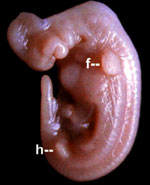
In contrast, the true atavistic tail of humans results from incomplete regression of the most distal end of the normal embryonic tail found in the developing human fetus (see Figure 2.4.1 and the discussion below on the development of the normal human embryonic tail; Belzberg et al. 1991; Dao and Netsky 1984; Grange et al. 2001; Keith 1921). Though formally a malformation, the true human tail is usually benign in nature (Dubrow et al. 1988; Spiegelmann et al. 1985). The true human tail is characterized by a complex arrangement of adipose and connective tissue, central bundles of longitudinally arranged striated muscle in the core, blood vessels, nerve fibres, nerve ganglion cells, and specialized pressure sensing nerve organs (Vater-Pacini corpuscles). It is covered by normal skin, replete with hair follicles, sweat glands, and sebaceous glands (Dao and Netsky 1984; Dubrow et al. 1988; Spiegelmann et al. 1985). True human tails range in length from about one inch to over 5 inches long (on a newborn baby), and they can move via voluntary striped muscle contractions in response to various emotional states (Baruchin et al. 1983; Dao and Netsky 1984; Harrison 1901; Keith 1921; Lundberg et al. 1962).
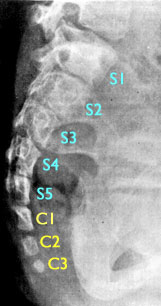
Although human tails usually lack skeletal structures (some medical articles have claimed that true tails never have vertebrae), several human tails have also been found with cartilage and up to five, well-developed, articulating vertebrae Bar-Maor et al. 1980; Dao and Netsky 1984; Fara 1977; Sugumata et al. 1988). However, caudal vertebrae are not a necessary component of mammalian tails. Contrary to what is frequently reported in the medical literature, there is at least one known example of a primate tail that lacks vertebrae, as found in the rudimentary two-inch-long tail of Macaca sylvanus (the "Barbary ape") (Hill 1974, p. 616; Hooten 1947, p. 23).
True human tails are rarely inherited, though several familial cases are known (Dao and Netsky 1984; Ikpeze and Onuigbo 1999; Touraine 1955). In one case the tail has been inherited through at least three generations of females (Standfast 1992).
In contrast, the true atavistic tail of humans results from incomplete regression of the most distal end of the normal embryonic tail found in the developing human fetus (see Figure 2.4.1 and the discussion below on the development of the normal human embryonic tail; Belzberg et al. 1991; Dao and Netsky 1984; Grange et al. 2001; Keith 1921). Though formally a malformation, the true human tail is usually benign in nature (Dubrow et al. 1988; Spiegelmann et al. 1985). The true human tail is characterized by a complex arrangement of adipose and connective tissue, central bundles of longitudinally arranged striated muscle in the core, blood vessels, nerve fibres, nerve ganglion cells, and specialized pressure sensing nerve organs (Vater-Pacini corpuscles). It is covered by normal skin, replete with hair follicles, sweat glands, and sebaceous glands (Dao and Netsky 1984; Dubrow et al. 1988; Spiegelmann et al. 1985). True human tails range in length from about one inch to over 5 inches long (on a newborn baby), and they can move via voluntary striped muscle contractions in response to various emotional states (Baruchin et al. 1983; Dao and Netsky 1984; Harrison 1901; Keith 1921; Lundberg et al. 1962).
Although human tails usually lack skeletal structures (some medical articles have claimed that true tails never have vertebrae), several human tails have also been found with cartilage and up to five, well-developed, articulating vertebrae Bar-Maor et al. 1980; Dao and Netsky 1984; Fara 1977; Sugumata et al. 1988). However, caudal vertebrae are not a necessary component of mammalian tails. Contrary to what is frequently reported in the medical literature, there is at least one known example of a primate tail that lacks vertebrae, as found in the rudimentary two-inch-long tail of Macaca sylvanus (the "Barbary ape") (Hill 1974, p. 616; Hooten 1947, p. 23).
True human tails are rarely inherited, though several familial cases are known (Dao and Netsky 1984; Ikpeze and Onuigbo 1999; Touraine 1955). In one case the tail has been inherited through at least three generations of females (Standfast 1992).
وما تفسير هذا ؟؟


(4)
بماذا تفسر وجود عظام الحوض ضامرة عند الحوت؟ ما البديل عن التطور؟
(5)
ما تفسير ظهور أرجل عند الأفاعي اذا لم تكن جياناتها موروثة ممن سبقها؟


ووجود جينات الأرجل عند الدولفين أيضا؟
(6)
بماذا تفسر قدم وجود الانسان الذي ذكرته سابقا Homo erectus، Homo ergaster والموجودين قبل 2 مليون سنة، رغم أن السنة النبوية واضحة في ذكر الأزمنة، ولو أولتها بالأجيال أيضا فلن تفسر هذا القدم..
كان آدم نبيا مكلما، كان بينه و بين نوح عشرة قرون، و كانت الرسل ثلاثمائة و خمسة عشر
الألباني السلسلة الصحيحة 2668 كان بين آدم ونوح عشرة قرون، وبين نوح وإبراهيم عشرة قرون
الألباني السلسلة الصحيحة 3289تحياتي
 :
:




Comment